
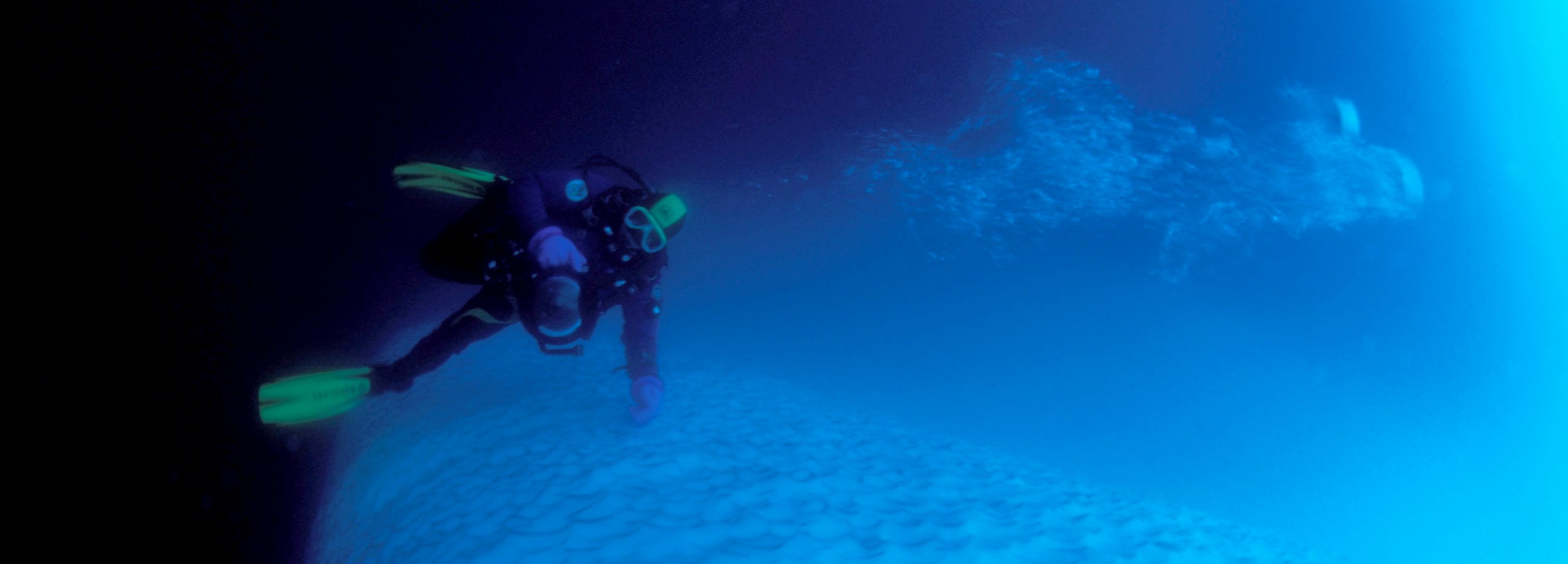
DIVING

Our thorough knowledge of the Polar areas enabled us to develop voyages combining nature cruises with diving expeditions, offering you the best dive sites in a fascinating world of ice. These polar diving cruises are still true expedition style.


Diving in Antarctica

Do I have to be an experienced diver ?


These voyages are not for beginners, you’ll have to be a very experienced diver and must be familiar with cold water diving and dry suit diving (at least 20 dives).
Before departure you will have to show an internationally accepted diving certificate, diver’s log book and insurance policy.
The first dive of the trip will be a ‘check’ dive to try out your gear and weights and for our dive master to see if all individual divers have enough experience to dive in the Antarctic waters.
If our dive master feels that the diver does not meet the necessary experience, he can decide to exclude the diver from the dive program (this decision will be made for your own safety). In this case, Oceanwide Expeditions cannot be held (financially) responsible and does not grant any claims. All divers are required to follow the instructions of the dive master and guides at all times. All participants are diving 100 % at their own risk, which is also the case while on land during the excursions.


A combination of nature and diving !


During the voyages, experienced dry suit divers have the opportunity to explore the wildlife from below the surface. Diving in Antarctica and the Arctic is fascinating indeed. However, the topside is as exciting. During the trip, with the prior approval of your expedition leader, you can choose to participate at any time in our thrilling land excursions and zodiac cruises instead of diving. This combination characterizes the uniqueness of our voyages. It will certainly be the ultimate experience for you !

Diving in Antarctica


What will you see while diving ?

The dive sites will vary from shallow ice diving, diving along a wall, from a beach or from the zodiac. The maximum depth is around 20 meters / 60 feet. The combination of sunlight and the often-extraordinary formations of ice cause an overwhelming, ever-changing spectre of colours, with a fantastic variety of shades
and brilliance. While snorkelling or diving along the ice floes, you will be amazed and never forget these deep blue colours. In the Antarctic and Arctic waters we may observe typical marine life such as sea squirts, squat lobsters, many species of starfish, spider crabs, soft corals, anemones, peacock worms, and dogfish.
Diving in Antarctica does not only offer ice, but also an interesting marine life, such as kelp walls, sea-snails, crabs, sea butterflies, various Antarctic fish, shrubby horse-tails, jelly-fishes, sea-hedgehogs, starfishes, krill and giant isopods. You may have the possibility to snorkel or dive with Fur Seals, Leopard Seals and penguins.


Number of dives

We plan at least one to two dives per day (except for days at sea), but an exact number of dives cannot be given. It all depends on ice and weather conditions.


Drive master

Our dive masters are highly experienced polar dive masters and instructors, being assisted by one or two dive guides. The main language of the dive operation will be in English.


Safety first !!

Diving in these remote Polar areas is no more dangerous than normal scuba diving as long as one important rule is adhered to: Safety First ! All divers looking for dangerous stunts or want to make deep dives are kindly asked to stay at home!
There is no decompression chamber in Antarctica. Medical care in these polar regions is almost non-existent and there is hardly any infrastructure. Although we have a doctor on board the vessel for first aid assistance, we cannot accept risky ventures from any of our divers.


Diving in Antarctica


Diving procedure

The voyage will start with a check-dive so all divers can get used to the cold water and try out their equipment and the number of weights they need. Before each dive, there will be a briefing about the location of the site, the weather and ice conditions and the procedure of the dive.
You don’t need to store your dive gear in your cabin. Upon arrival our dive staff will show you where you can leave your dive equipment. Only take your regulator with you in your cabin. Every diver is expected to prepare his own equipment well in advance prior to each dive. Bring your own spare parts for your regulators and dry suit in case of leakage or damage.
The divers are expected to set up and carry their own equipment in and out of the zodiac and sometimes up and down the gangway.
The dives will be done on a 'buddy system' basis. The dive guide will not be in the water to accompany and lead the divers. The guides will stay on the surface for the divers’ safety. The divers are expected to be experienced enough to read their compass, depth gauges and look after each other in order to have a safe dive.


What to pack for your Diving

Please contact your airline about their luggage restrictions and request a special allowance for your dive equipment prior to departure. All excess baggage is at your own expense.


    Dry suit with hood

    Thick and warm underwater garment (2 sets), dry gloves or adequate thick wet gloves (make sure they will keep your hands warm in sub-zero waters)

    Freeze protected regulator

    2 separate regulators, because we dive with special bottles with two separate outlets The tanks we are using are 12L steel tanks. They are fitted with a “Y” or “H” valve configuration, with DIN or Yoke (INT) adaptable connections.

    Pressure gage

    Stabilizing jacket or some kind of BC with quick release – divers without BDC trusting only their dry suit for buoyancy control will not be allowed to dive.

    Depth gage, watch or computer

    Compass

    Knife and a torch

    Mask, fins and snorkel

    Weight belt (weights available on board)


Please note that the snorkel is a vital part of the safety equipment and will often be used when snorkelling with seals and such.
IMPORTANT: Do not bring any new equipment on this expedition that you have
not already tested in the water and you are not very familiar with. The Polar
regions are not the place to test out new equipment.
It is required that you complete a few dives with all the equipment you will be using before coming on the trip. This will also allow you to fine-tune your buoyancy and trim characteristics, and make a note of how much weight you will need when diving with all your equipment.


Equipment on board

On board we have a Bauer compressor (200 litres), 35 steel bottles of 12 litres, 200 bar, with DIN and Yoke adaptable connections and two separate outlets. This will allow for the attachment of a primary and a secondary backup regulator, which allows for either regulator to be independently isolated if there is a malfunction or a free flow.

 
Departures with Diving in Antarctica
Itinerary Departure Arrival Nights Ship From USD
Polar Circle – Antarctic Peninsula 09-mar-12 20-mar-12 11 Plancius 7.050
Weddell Sea & Antarctic Peninsula 06-feb-12 17-feb-12 11 MV Polar Pionner 6.775
Weddell Sea & Antarctic Peninsula 17-feb-12 28-feb-12 11 MV Polar Pionner 6.775
Antarctic Peninsula 20-mar-12 29-mar-12 09 Plancius 5.290


    Weights

You will provided with hard led weights and a belt. There are no ankle weights available. We do not have any rentals on board. Please make sure you check out all your dive gear before leaving. Bins are available for storage.

Setting up your gear You need two sets of regulators;


      1st set includes:

      Freeze protected First stage

      Second stage (incl. hose)

      Hose for BC

      Pressure gage / computer


    2nd set includes:

    Freeze protected First stage

    Second stage (incl. hose)

    Hose for Dry suit

    Ice and weather

Please note that the itinerary in the Arctic, Antarctica, Falklands (Malvinas) and South Georgia is always weather and ice permitting. It is always possible that because of the pack ice and drift ice, we have to change our sailing chedule. It is possible that certain bays or fjords are closed because of ice. In such a case, we have to re-route our voyage. Possible alterations that relate to weather and ice conditions, can never be a reason for claims, reimbursements or whatsoever.
When changing the itinerary, we can assure you that the captain, expedition leader and dive master will do their utmost to provide an alternative program, along the same lines as the originally planned cruise itinerary.


Diving expedition

These diving voyages are true expeditions. Although we know the destinations in detail, each dive will be a surprising event. Please note, that ice is not static but always in movement.
This means, that the actual situation (colours, marine wildlife) under the surface, always depends on the conditions and formations of the ice. Not achieved personal expectations in reference to the diving cannot be grounds for claims, reimbursements or whatsoever. However, our experienced dive master will do his utmost to offer the best dive sites in the Arctic, Antarctica, Falkland Islands (Malvinas) and South Georgia.


  Special Activities in Antarctica